Collar or Harness: Which Is Better for Your Alaskan Klee Kai?
As the founder of Kika’s Klee Kai here in Southern California, and with over two decades of hands-on experience working with dogs, I’ve seen countless new puppy owners grapple with a fundamental question: collar or harness? It’s a decision that can significantly impact your Alaskan Klee Kai’s comfort, safety, and training success. While both have their place, understanding their primary purpose is key to making the right choice for your spirited companion. We not only breed these incredible dogs but also guide families nationwide through the journey of responsible Klee Kai ownership, and this topic comes up time and again.
Understanding the Basics: Collars vs. Harnesses
Let’s cut straight to the chase. Many people assume a harness is always the gentler option, but that’s not always the full picture, especially when it comes to training a Klee Kai.
The Harness: Designed for Pulling, Not Correcting
Harnesses were originally designed for working dogs—think sled dogs or those pulling carts. Their fundamental design distributes weight evenly across a dog’s chest, making it comfortable for them to pull. This is fantastic if you want your dog to pull, but it becomes counterproductive if you’re trying to teach them polite leash manners.
Pros of Harnesses:
- Comfort for Pulling: If your Klee Kai is involved in activities like canicross or dog scootering, a well-fitted harness is essential for their comfort and safety.
- Even Weight Distribution: Reduces strain on the neck and throat, which can be beneficial for dogs with certain health conditions.
Cons of Harnesses:
- Encourages Pulling: The very design that makes them comfortable for pulling means they don’t offer any corrective feedback when your dog pulls on the leash. In fact, they can inadvertently reinforce the behavior.
- Ill-fitting Issues: A poorly fitted harness can chafe, especially in warmer climates like ours in Southern California, and can even alter a dog’s natural gait over time. This can lead to discomfort and potential long-term issues.
- Escape Risk: Many harnesses, particularly those that clip on the back, allow agile dogs like the Alaskan Klee Kai to easily back out and escape, posing a significant safety risk.
The Collar: A Tool for Communication and Correction
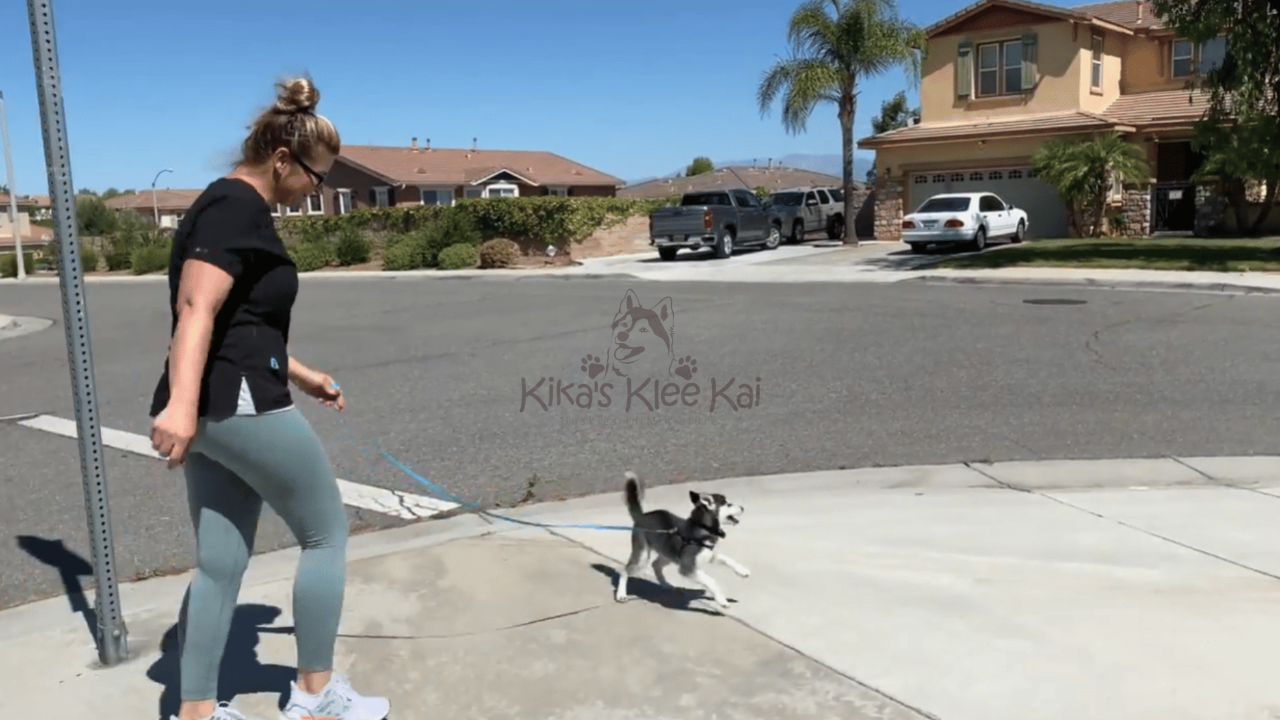
When it comes to teaching your Alaskan Klee Kai to walk politely on a leash, a collar, specifically the right type of collar, is often a more effective tool for communication and gentle correction.
Pros of Collars:
- Effective for Correction: When used correctly, a collar provides clear, immediate feedback that helps redirect your dog’s attention and discourage pulling.
- All-Day Wear: A properly fitted flat collar can be worn comfortably all day, indoors and out, providing a constant place for ID tags and quick leash attachment.
- Less Expensive: Generally more affordable than harnesses.
Cons of Collars:
- Improper Use Risks: Using the wrong type of collar (like a choke chain or prong collar without professional guidance) or fitting it incorrectly can cause injury to your dog’s neck or throat. This is why education is so crucial.
Desarie’s Recommendation: The Martingale Collar
For most Alaskan Klee Kai owners, especially those dealing with a spirited pup who loves to pull or is a bit of an escape artist, I wholeheartedly recommend the Martingale-style collar.
This collar is a game-changer. It features two loops: a larger loop that goes around your dog’s neck like a standard flat collar, and a smaller loop where the leash attaches. When your dog pulls, the smaller loop tightens the larger loop just enough to provide a gentle, safe, and effective correction. It doesn’t choke, but it does create a slight discomfort that reminds your Klee Kai to pay attention to you.
Why the Martingale is Ideal for Alaskan Klee Kai:
- Safe Correction: It provides a humane way to communicate with your dog without causing harm.
- Escape-Proof Design: The tightening action prevents your Klee Kai from backing out of the collar, offering peace of mind during walks.
- Clear Communication: It allows for precise, timely feedback, which is essential for effective leash training.
Common Mistakes New Owners Make When Choosing Leash Equipment
Bringing home a new Alaskan Klee Kai puppy, whether you’re local to Southern California or flying in from across the country, is an exciting time. But in that excitement, it’s easy to make mistakes with equipment that can hinder your training efforts. Here are some common pitfalls I see:
- Assuming a Harness is Always Better: As we’ve discussed, while harnesses have their place, they are not a substitute for proper leash training and can actually make pulling worse.
- Using a Standard Flat Collar for Pullers: A flat collar offers no corrective action and can be easily slipped out of by a determined Klee Kai, especially if they’re startled or distracted.
- Incorrect Sizing: Whether it’s a collar or a harness, incorrect sizing is a major issue. Too loose, and it’s an escape risk; too tight, and it’s uncomfortable and can cause chafing or injury. Always ensure you can fit two fingers comfortably under the collar or harness.
- Relying on Equipment Instead of Training: This is perhaps the biggest mistake. No piece of equipment, no matter how well-designed, can replace consistent, positive reinforcement training. The Martingale collar is a tool to aid training, not a magic solution.
Training Tips for Leash Manners with Your Alaskan Klee Kai
Remember, the equipment is just one piece of the puzzle. Your consistent effort and clear communication are what truly shape your Klee Kai’s behavior. Here are some foundational tips:
- Start Early: Begin leash training as soon as your puppy is settled in. The earlier you start, the easier it is to establish good habits.
- Consistency is Key: Everyone in the household needs to be on the same page regarding leash manners and equipment use.
- Positive Reinforcement: Reward your Klee Kai generously for walking nicely on a loose leash. High-value treats and praise go a long way.
- Short, Frequent Sessions: Puppies have short attention spans. Keep training sessions brief and fun.
- Socialization: Expose your Klee Kai to various sights, sounds, and environments on leash from a young age to build their confidence and reduce reactivity.
Ready for Your Alaskan Klee Kai?
Choosing the right equipment is just one step in providing a loving, structured home for your Alaskan Klee Kai. At Kika’s Klee Kai, we’re dedicated to helping responsible families like yours navigate every stage of puppy ownership. From our home in Southern California, we connect with families nationwide, ensuring our puppies find their perfect match. If you’re ready to welcome an intelligent, loyal, and spirited Alaskan Klee Kai into your life, we invite you to learn more about our breeding program and the Kika’s Klee Kai family.
Ready to embark on this incredible journey? Apply for a puppy or join our waitlist today at kikaskleekai.com. We look forward to guiding you every step of the way! Apply here!