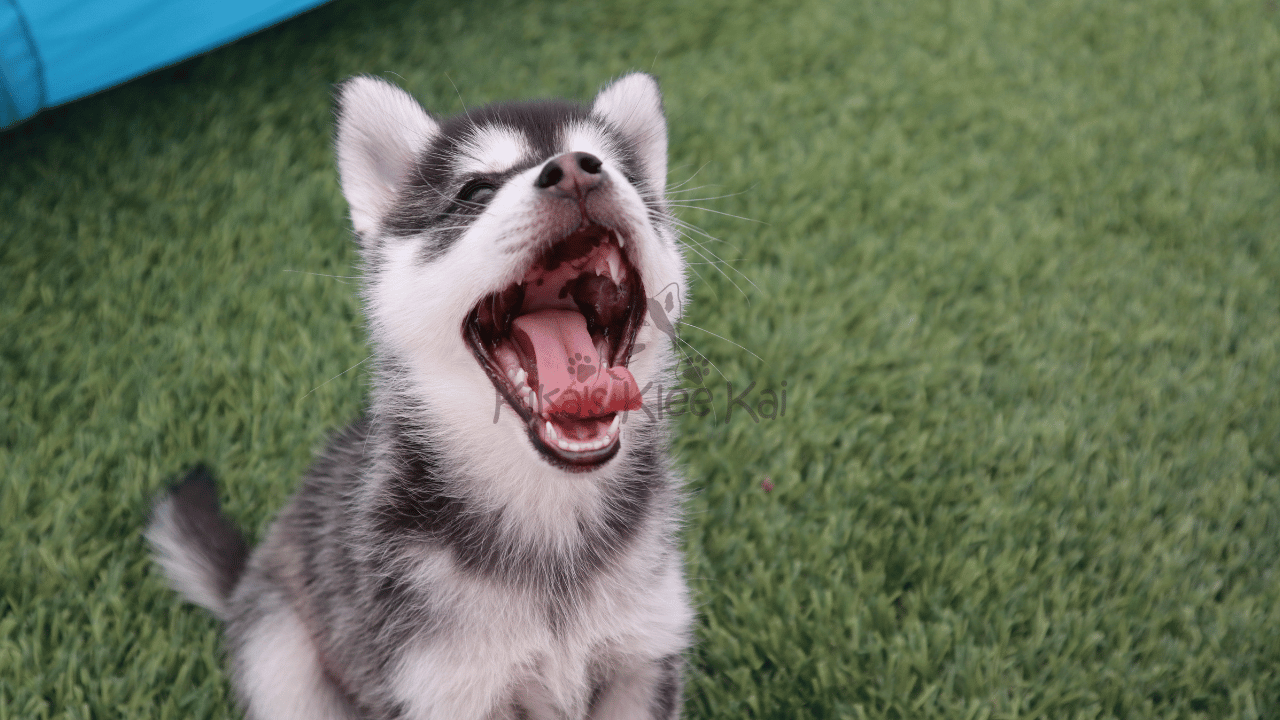
Why Does My Klee Kai Howl? Understanding Alaskan Klee Kai Vocalizations
If you've ever lived with an Alaskan Klee Kai, you may have experienced something that surprises many new owners:
They have a lot to say.
Klee Kai can be wonderfully expressive. They may bark, howl, whine, yodel, "talk," or make a variety of other sounds.
For new owners, these vocalizations can sometimes be confusing.
Is your dog upset?
Excited?
Bored?
Trying to get your attention?
Understanding why your Klee Kai is vocal can help you respond appropriately.
Are Alaskan Klee Kai Vocal?
Many Klee Kai owners describe their dogs as highly expressive and vocal.
Individual dogs vary, however.
Some Klee Kai are very chatty, while others are relatively quiet.
Your dog's vocal behavior can also change depending on the situation.
Why Does My Klee Kai Howl?
There isn't one single reason.
Howling can be a form of communication, and dogs may howl in response to different sounds or situations.
Your Klee Kai might howl because they:
- Hear another dog
- Respond to a siren or unusual sound
- Want attention
- Are excited
- Are frustrated
- Are trying to communicate
- Are reacting to something in their environment
Pay attention to what happens immediately before the howling.
The context often provides important clues.
Why Does My Klee Kai "Talk"?
Some Klee Kai make sounds that seem almost conversational.
They may respond when you speak to them or make noises when they're excited about something.
This can be part of their individual personality and communication style.
If your dog is otherwise comfortable and healthy, these quirky sounds can simply be one of the entertaining things about living with a Klee Kai.
Excitement Can Make Dogs Vocal
You may notice more vocalization during exciting moments.
For example:
"Are we going for a walk?"
"Is that my dinner?"
"Are you leaving?"
"Is that another dog?"
Your Klee Kai may express excitement through barking, whining, howling, or other sounds.
Frustration Can Also Cause Vocalization
Dogs sometimes vocalize when they can't get what they want.
For example, your Klee Kai may bark because they want access to something on the other side of a gate.
Instead of immediately giving them what they're asking for, teach and reward calm behaviors.
For example, wait for a moment of quiet before providing attention or access when appropriate.
Attention-Seeking Barking
If barking consistently results in attention, your dog may learn that barking works.
Even negative attention can sometimes reinforce a behavior.
Instead, whenever appropriate, reward your dog for being calm and quiet.
You can also teach an alternative behavior such as sitting or settling.
Boredom Can Contribute to Vocalization
An under-stimulated Klee Kai may look for something to do.
That might involve barking at sounds outside, vocalizing at you, or finding their own entertainment.
Make sure your dog receives an appropriate balance of:
- Physical activity
- Training
- Mental stimulation
- Play
- Social interaction
- Rest
A busy dog isn't necessarily a fulfilled dog, but appropriate enrichment can help reduce boredom-related behaviors.
Separation-Related Vocalization
Some dogs become vocal when their people leave.
If your Klee Kai consistently howls, barks, or shows distress when left alone, pay attention to the full pattern.
Other signs of distress may include:
- Pacing
- Destructive behavior
- Attempts to escape
- Excessive drooling
- Inability to settle
If you're concerned that your dog may be experiencing significant separation-related distress, consider working with a qualified professional.
Don't Automatically Punish Vocalization
Before correcting a vocal behavior, ask:
"Why is my dog making this noise?"
If your dog is frightened, frustrated, or distressed, simply punishing the sound doesn't address the underlying issue.
Understanding the cause allows you to choose a more appropriate response.
Teach a Calm Behavior
Instead of focusing only on stopping barking, teach your dog what you want them to do instead.
For example:
- Wait for a brief moment of quiet.
- Reward the quiet behavior.
- Gradually increase the duration.
- Practice in different situations.
- Reward calm check-ins.
Over time, your dog can learn that calm behavior gets rewarded.
When Vocalization May Need Attention
A sudden change in vocal behavior deserves attention.
If your normally quiet Klee Kai suddenly becomes extremely vocal, especially alongside changes in appetite, movement, sleep, bathroom habits, or general behavior, talk with your veterinarian.
Behavior changes can sometimes have an underlying physical cause.
Learning to Speak Klee Kai
One of the joys of living with an Alaskan Klee Kai is learning their individual personality.
Over time, you'll start recognizing the difference between:
"Someone is at the door!"
"I want to play!"
"Where are you going?"
"That's an interesting sound!"
And:
"Something isn't right."
Your dog's vocalizations are part of how they communicate with you.
The goal isn't necessarily to eliminate every sound.
It's to understand what your Klee Kai is trying to tell you and teach appropriate behavior when vocalization becomes excessive.
Embrace the Personality
Klee Kai aren't always the quietest dogs in the room—and that's part of their charm.
Their expressions, personalities, and unique vocalizations are some of the reasons their owners love them so much.
With patience, training, enrichment, and an understanding of the reason behind the behavior, you can learn to live happily with your very own little conversationalist.