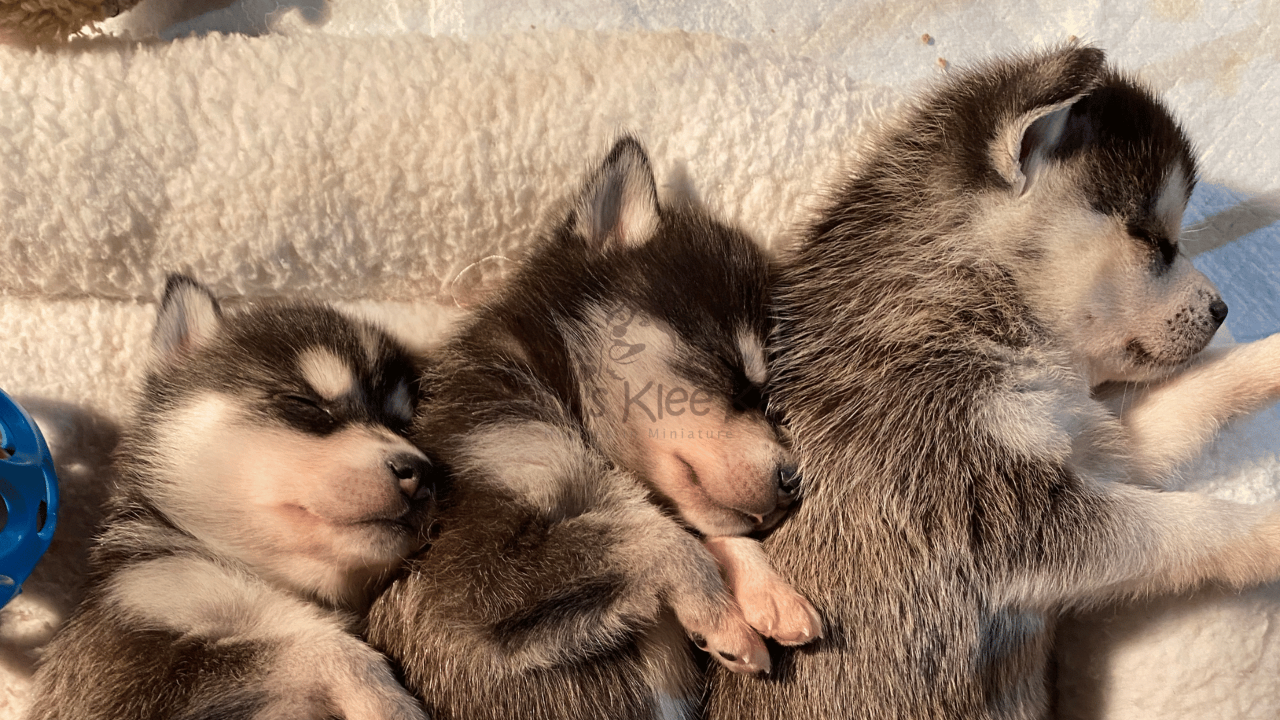
Alaskan Klee Kai: The Marvelous Milestones of Four-Week-Old Puppies
Welcome, future Klee Kai families and dog enthusiasts! As the founder of Kika’s Klee Kai here in sunny Southern California, I’ve had the privilege of witnessing countless litters grow from tiny bundles into confident, loving companions. With over two decades of hands-on experience in breeding, training, and educating new puppy owners, I can tell you that the four-week mark is a truly magical time in a puppy’s development. It’s when their personalities truly begin to blossom, and the foundation for their future behavior is laid. While we are based in Southern California, our Klee Kai puppies find their forever homes nationwide, with dedicated families flying or driving in to meet their new additions.
The Rapid Development of a Four-Week-Old Alaskan Klee Kai
At four weeks old, Alaskan Klee Kai puppies are no longer just sleeping and nursing. They are actively exploring their world, albeit in a wobbly, adorable fashion. This period is characterized by significant sensory and motor skill development, making it a crucial time for early learning and interaction.
Physical Milestones
By four weeks, a Klee Kai puppy’s eyes are fully open, and their vision is rapidly improving, allowing them to perceive their surroundings with greater clarity. Their ears are also open, and they are beginning to respond to sounds, though their hearing is still developing. You’ll notice their first wobbly steps becoming more coordinated, transforming into playful tumbles and short bursts of exploration. This is also when those tiny, needle-sharp puppy teeth start to emerge, signaling the transition towards solid food and the beginning of the weaning process. It’s a messy, but essential, step in their growth!
Socialization Begins in Earnest
This age marks the true beginning of social interaction within the litter. Puppies start to engage in playful wrestling, nipping, and chasing with their siblings. These interactions are vital for learning bite inhibition, understanding canine body language, and developing appropriate social skills. They also spend more time interacting with their mother, learning boundaries and comfort. As a breeder, I carefully observe these interactions, ensuring a healthy and balanced environment for each puppy to thrive. This early exposure to litter dynamics is irreplaceable and sets the stage for a well adjusted adult dog.
Laying the Foundation: Early Training and Environment
For us at Kika’s Klee Kai, the four-week mark is when we intensify our efforts in providing a structured and enriching environment. It’s never too early to start instilling good habits, and these early weeks are pivotal for shaping a confident and well behaved Alaskan Klee Kai.
Introduction to Potty Training Concepts
While they are still very young, we begin introducing the concept of potty training. This involves creating designated potty areas within their living space, encouraging them to relieve themselves away from their sleeping and eating areas. This early exposure helps them understand the basic principle of cleanliness and makes the transition to house-training in their new homes much smoother. Consistency is key, even at this tender age.
Early Socialization and Exposure
Beyond littermate interaction, we carefully introduce our four-week-old puppies to various gentle stimuli. This includes different textures, sounds, and supervised human interaction. The goal is to create positive associations with new experiences, building their confidence and reducing the likelihood of fear-based behaviors later on. This controlled exposure is critical for developing a resilient and adaptable Klee Kai, ready to face the world with their new families.
The Importance of Routine
Even for young puppies, a predictable routine provides comfort and security. We establish consistent feeding times, playtimes, and rest periods. This structure helps regulate their internal clocks and teaches them what to expect, fostering a sense of calm and predictability. This is a practice I strongly advocate for all new puppy owners – a consistent routine is the bedrock of a well-adjusted dog.
Preparing Your Home and Heart for Your Klee Kai
If you’re eagerly awaiting your Alaskan Klee Kai puppy, these weeks are the perfect time to prepare your home and family for their arrival. Thinking ahead ensures a smooth transition for everyone.
Puppy-Proofing Your Space
Just like with a human toddler, puppy-proofing is essential. Get down on your hands and knees and look for anything a curious puppy might chew, swallow, or get into. Secure electrical cords, remove toxic plants, and store household chemicals out of reach. A safe environment allows your puppy to explore without constant supervision, fostering independence.
Essential Supplies
Start gathering your puppy’s essentials: a comfortable crate (this will be their safe den), high-quality puppy food, food and water bowls, appropriate chew toys, a leash and collar, and grooming tools. Having these ready before your puppy arrives will reduce stress and allow you to focus on bonding.
Common Mistakes New Owners Make When Bringing Home an Alaskan Klee Kai Puppy
Bringing a new puppy home is exciting, but it’s also a significant responsibility. Based on my years of experience, here are some common pitfalls new Klee Kai owners often encounter:
- Not Establishing a Routine Early: Alaskan Klee Kai thrive on routine. Failing to set a consistent schedule for feeding, potty breaks, play, and sleep from day one can lead to confusion, anxiety, and slower progress in training.
- Over-Socializing or Under-Socializing: While socialization is crucial, over exposing a young puppy to too many new experiences too quickly can be overwhelming. Conversely, not providing enough varied, positive socialization experiences can lead to fear or reactivity. Balance is key – controlled, positive introductions are best.
- Ignoring Early Signs of Separation Anxiety: Klee Kai are companion dogs and can be prone to separation anxiety if not taught to be alone from a young age. Failing to practice short, positive periods of alone time (e.g., in their crate) can lead to destructive behaviors and distress later on.
- Underestimating Their Intelligence and Energy: These are smart, active dogs. Many new owners underestimate the mental and physical stimulation an Alaskan Klee Kai requires. Without adequate outlets, they can become bored, leading to mischievous or destructive behaviors. Consistent training, puzzle toys, and regular exercise are non-negotiable.
- Inconsistent Training: Klee Kai are intelligent but can be stubborn. Inconsistent commands or expectations will confuse them and hinder training progress. Everyone in the household must be on the same page with rules and training methods.
Ready for Your Alaskan Klee Kai?
Witnessing the growth of these incredible dogs is a journey I cherish, and I am passionate about guiding new families through every step. If you’re ready to welcome a loyal, intelligent, and spirited Alaskan Klee Kai into your life, we invite you to learn more about our breeding program and our commitment to healthy, well-socialized puppies. We’re here to support you in building a strong, loving relationship with your new companion.
Ready to take the next step? Visit kikaskleekai.com to apply for a puppy or join our waitlist today. We look forward to connecting with you and helping you find your perfect Klee Kai companion! Apply here!